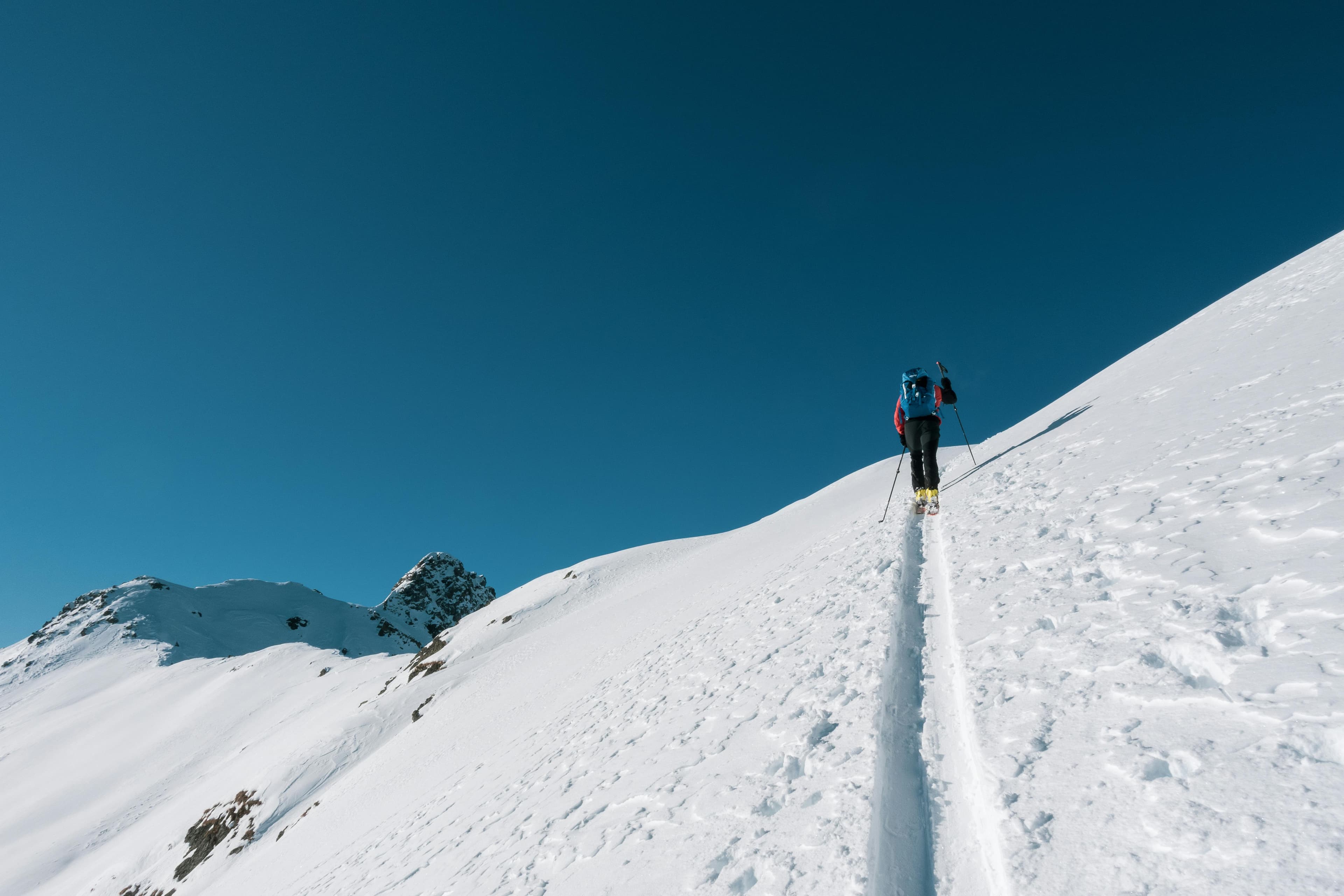
However, this freedom comes with significant responsibility and risk that requires proper education, preparation, and respect for the mountain environment.
What Is Backcountry Skiing and How Does It Differ from Resort Skiing?
Backcountry skiing, also known as ski touring or ski mountaineering, involves skiing in uncontrolled, unpatrolled terrain outside of ski resort boundaries. Unlike resort skiing, you must earn every descent by climbing uphill using specialized equipment, and you're responsible for your own safety and rescue.
Key differences from resort skiing include no groomed runs or marked boundaries, no ski patrol or immediate rescue services, avalanche risk assessment requirements, physical fitness demands for uphill travel, and the need for self-rescue skills and equipment.
What Skills and Physical Fitness Do You Need Before Your First Backcountry Tour?
Before considering backcountry skiing, you need a solid foundation of resort skiing skills, physical fitness, and mountain awareness. Backcountry skiing amplifies every challenge—poor technique, inadequate fitness, or lack of mountain sense can quickly become dangerous.
Prerequisites include advanced intermediate to expert resort skiing ability, comfort in all snow conditions, ability to ski steep terrain, strong parallel turns and edge control, and experience skiing in variable visibility. Physical fitness requirements include cardiovascular endurance, leg strength, core stability, and mental resilience.
Why Is Avalanche Education Non-Negotiable for Backcountry Skiers?
Avalanche education is the cornerstone of backcountry skiing safety. This isn't optional knowledge—it's literally life-or-death information that every backcountry skier must understand and practice regularly.
The mountains don't care about your experience level, your gear, or your plans. They only respond to your decisions and your respect for their power.
Required education levels include Level 1 (Avalanche Rescue) for basic companion rescue, Level 2 (Avalanche Hazard Evaluation) for trip planning, Level 3 (Advanced Avalanche) for professional-level risk management, and ongoing education through regular refresher courses.
What Specialized Gear Do You Need for Backcountry Skiing?
Backcountry skiing requires specialized equipment for both uphill travel and safety. While the initial investment is significant, quality gear is essential for performance, comfort, and survival in the backcountry environment.
The avalanche safety "Holy Trinity" includes an avalanche transceiver (digital beacon), probe (collapsible pole), and shovel (metal blade). Touring equipment includes lighter touring skis, bindings that allow heel lift, touring boots with walk mode, climbing skins for uphill traction, and ski crampons for icy conditions.
How Do You Plan a Safe First Backcountry Ski Tour?
Your first backcountry ski tour should be conservative, well-planned, and ideally guided by an experienced mentor or professional guide. The goal is to gain experience in a controlled environment while building confidence and skills.
Choose low-angle terrain (less than 30 degrees), areas with minimal avalanche exposure, tours with easy access and escape routes, and start with short distances. Plan for stable weather conditions and go with experienced partners or hire a guide.
How Do Experienced Backcountry Skiers Build Skills Safely Over Time?
Backcountry skiing expertise develops over years of experience, continuous learning, and gradual progression to more challenging terrain. There are no shortcuts to mountain wisdom—it must be earned through time, practice, and sometimes difficult lessons.
Before heading out this winter, also read our snowshoeing guide for a lower-risk way to build winter mountain confidence, and our seasonal budget adventures guide for free winter trail ideas.
Remember that the mountains will always be there, but you need to be alive to enjoy them. Conservative decision-making, continuous learning, and respect for the mountain environment are the hallmarks of successful backcountry skiers.

